


2026.09.30
Complete Guide to Taxis in Kansai【Osaka, Nara & Kyoto】
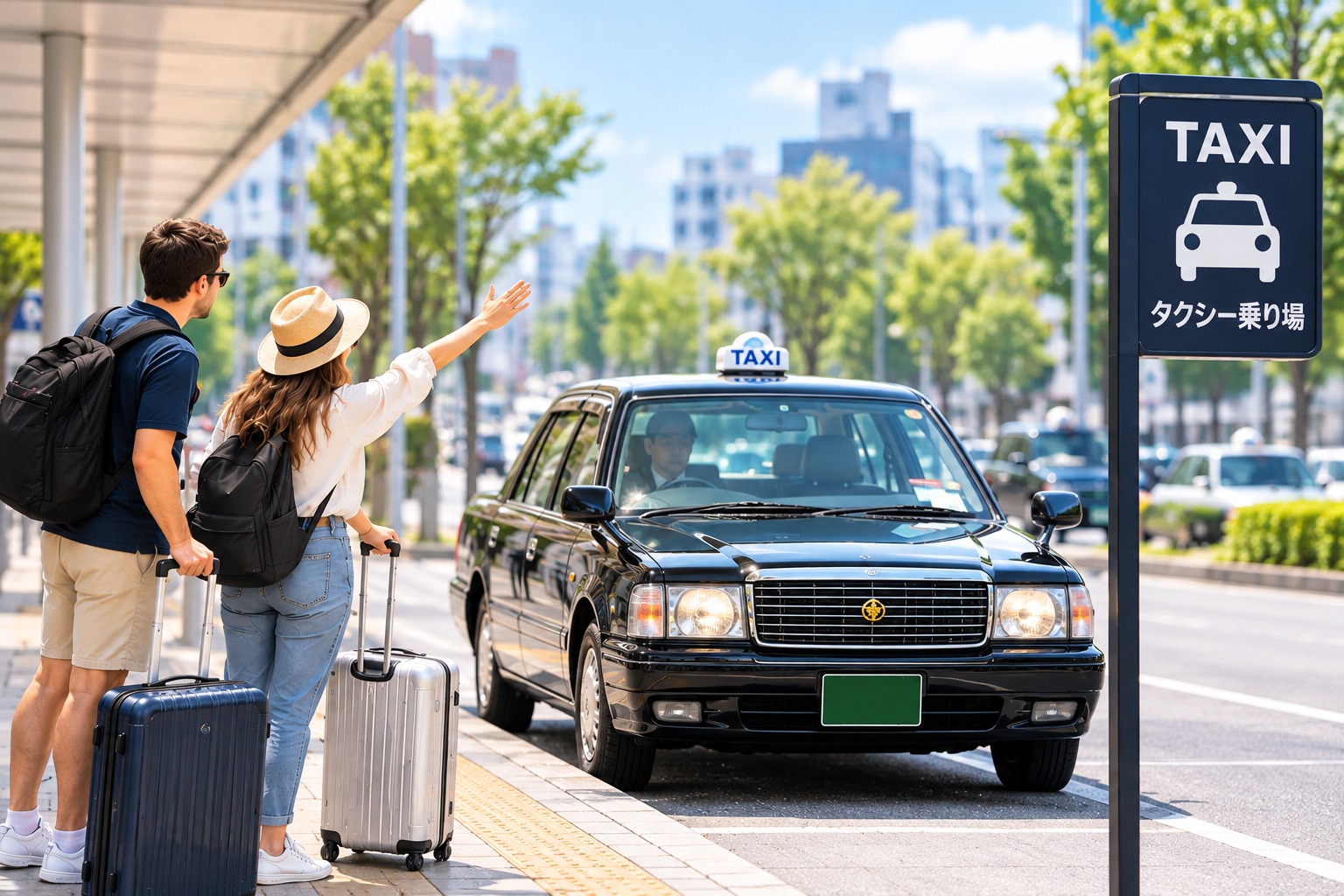
What to Know About Taking Taxis in Osaka, Nara & Kyoto
Taxis are a convenient way to get around Japan, especially when traveling to places that are difficult to reach by train or bus, or when you are carrying large pieces of luggage.
In Japan, you can generally take a taxi from designated taxi stands at train stations, hotels, and other locations. You can also raise your hand to stop an available taxi traveling on the road and get in on the spot. However, there are some important things to know when taking taxis in tourist areas such as Osaka, Kyoto, and Nara.
You may sometimes find yourself thinking:
“I raised my hand because an available taxi was coming, but it didn’t stop. Why?”
This does not necessarily mean that the driver refused to take you. In some areas of Kansai, passengers are required to use designated taxi stands, while certain areas prohibit roadside pickups during specific hours. In addition, in places such as Nara, taxis generally do not operate by cruising around the streets looking for passengers.
In this guide, we will explain the basic rules for taking taxis in Japan, as well as important points to keep in mind when using taxis in major tourist areas of Osaka, Kyoto, and Nara.
How to Take a Taxi in Japan
There are three main ways to take a taxi in Japan.
① Take a Taxi from a Taxi Stand
Taxi stands marked with “TAXI” can be found at train stations, airports, hotels, large commercial facilities, and other locations. If several taxis are lined up, passengers generally board the first taxi in line.
② Hail a Taxi on the Street
Some taxis traveling around the city are available for passengers. If you raise your hand in a place where the taxi can safely stop, the taxi will pull over and you can get in there.
However, this method cannot be used in places where taxis are prohibited from stopping under Japan’s Road Traffic Act or where the area has its own taxi pickup rules.
③ Use a Taxi-Ride-Hailing App
You can use a taxi app on your smartphone to call a taxi to your current location or another designated pickup point. Since you can enter both the pickup location and destination directly in the app, this is also convenient for travelers who may have difficulty explaining their destination in Japanese.
Be Careful When Taking Taxis in Kansai Tourist Areas
In major tourist areas such as Osaka, Kyoto, and Nara, there are area-specific rules regarding where taxis can pick up and drop off passengers in order to prevent traffic congestion and accidents.
Therefore, even if you remember that “you can hail a taxi by raising your hand in Japan,” there are some places where a taxi may not be able to stop.
Pay particular attention in the following areas.
Osaka・Shinsaibashi~Namba|Be Especially Careful After 10:00 p.m.
The areas around Shinsaibashi, Dotonbori, and Namba are some of Osaka’s most popular entertainment and shopping districts. Around Shinsaibashi on Midosuji Avenue, there are designated areas where taxis are allowed to stop, and taxis cannot stop outside designated taxi stands.
In addition, the “Minamichi” area has a taxi no-pickup zone from 10:00 p.m. to 1:00 a.m.
The Osaka Taxi Center advises passengers traveling in the Kitashinchi and Minamichi areas to use designated taxi stands between 10:00 p.m. and 1:00 a.m., and not to board taxis outside these stands or directly on the street.
Especially at night around Shinsaibashi, Dotonbori, and Namba, instead of trying to hail a taxi on the street, use an official taxi stand marked with a “TAXI” sign.
Osaka・Umeda / Kitashinchi|Taxi Pickup Restrictions During Certain Hours
The Kitashinchi area, within walking distance of Osaka Station and Umeda, also has specific rules for taking taxis.
In Kitashinchi, a taxi no-pickup zone is in effect from 10:00 p.m. to 1:00 a.m. In some areas, vehicles are also prohibited from entering during these hours. There are exceptions to these restrictions depending on the day of the week, holidays, and other conditions.
Therefore, if you need to take a taxi in Kitashinchi at night, it is safer to use a designated taxi stand rather than trying to hail a taxi on the street.
Please note that this does not mean that taxis cannot be hailed anywhere in Umeda at night. The restrictions apply to designated areas centered around Kitashinchi.
Nara City|Don’t Rely on Hailing a Taxi on the Street
If you visit Nara after taking a taxi in Osaka or another area, one important thing to be aware of is the difference in how taxis operate.
In Nara Prefecture, some taxi companies do not operate by cruising around the city looking for passengers. For example, Nara Kintetsu Taxi states that it mainly uses a “station waiting / garage waiting” operating style in Nara Prefecture and does not have drivers cruise around their service areas looking for passengers.
Instead, passengers generally take taxis from train stations or call a taxi by phone, reservation, or taxi-hailing app.
Therefore, when you are in Nara City, even if you see a taxi driving on the road, it is better not to assume that it will stop if you raise your hand.
Using taxi stands at Kintetsu Nara Station or JR Nara Station, or calling a taxi through a taxi-hailing app, is a convenient option.
Kyoto・Shijo Street|Pay Attention to Where Taxis Can Stop
The areas around Shijo Kawaramachi and Shijo Karasuma, two of Kyoto’s major downtown areas, are also places where you should take care when using taxis.
Along Shijo Street, “roadside access spaces” have been established as part of improvements to the roads and sidewalks, allowing vehicles to stop temporarily. In addition, taxi stands where taxis can wait for passengers are located in front of Daimaru Kyoto and Kyoto Takashimaya. These roadside access spaces can also be used for getting in and out of taxis.
However, under Japan’s Road Traffic Act, taxis cannot pick up or drop off passengers within 5 meters of an intersection, within 5 meters of a crosswalk, or within 10 meters of a bus stop, among other restricted areas. Kyoto City also advises caution when getting in or out of taxis near major intersections such as Shijo Kawaramachi.
When taking a taxi around Shijo Kawaramachi and other areas, do not try to stop a taxi near an intersection. Instead, use a taxi stand or another location where it is safe to get in and out of the vehicle.
When You Can’t Find a Taxi, the “GO” Taxi-Hailing App Is Convenient
If you cannot find a taxi stand nearby or an available taxi does not stop when you try to hail it, the “GO” taxi-hailing app can be a convenient option.
GO is currently available in all 47 prefectures of Japan. You can use the app to specify your pickup location and destination and call a taxi, making it convenient for overseas travelers who may have difficulty explaining their location in Japanese.
The official website supports English, Korean, and Chinese (Simplified and Traditional Chinese). It also supports credit cards issued overseas and Apple Pay.
GO Official Website (English)
Things to Know When Using GO
When using GO, additional fees such as a pickup fee and various service charges may apply in addition to the standard taxi fare.
According to GO’s official fare information updated on July 24, 2026, eligible users are charged an International Service Charge of ¥200. Depending on the conditions of use, a GO app dispatch fee and other charges may also apply.
You can check the details of the actual amount you will pay in the “Fare Details” screen in the app before requesting a taxi.
If you are staying in Japan for an extended period and plan to visit many urban areas, downloading apps such as GO can make your trip more convenient and comfortable. However, GO and similar services are still not widely available in some areas. In such places, it is recommended to look for taxi stands at train stations or facilities where many people gather.
We hope this information helps you enjoy a comfortable and enjoyable trip in Japan!